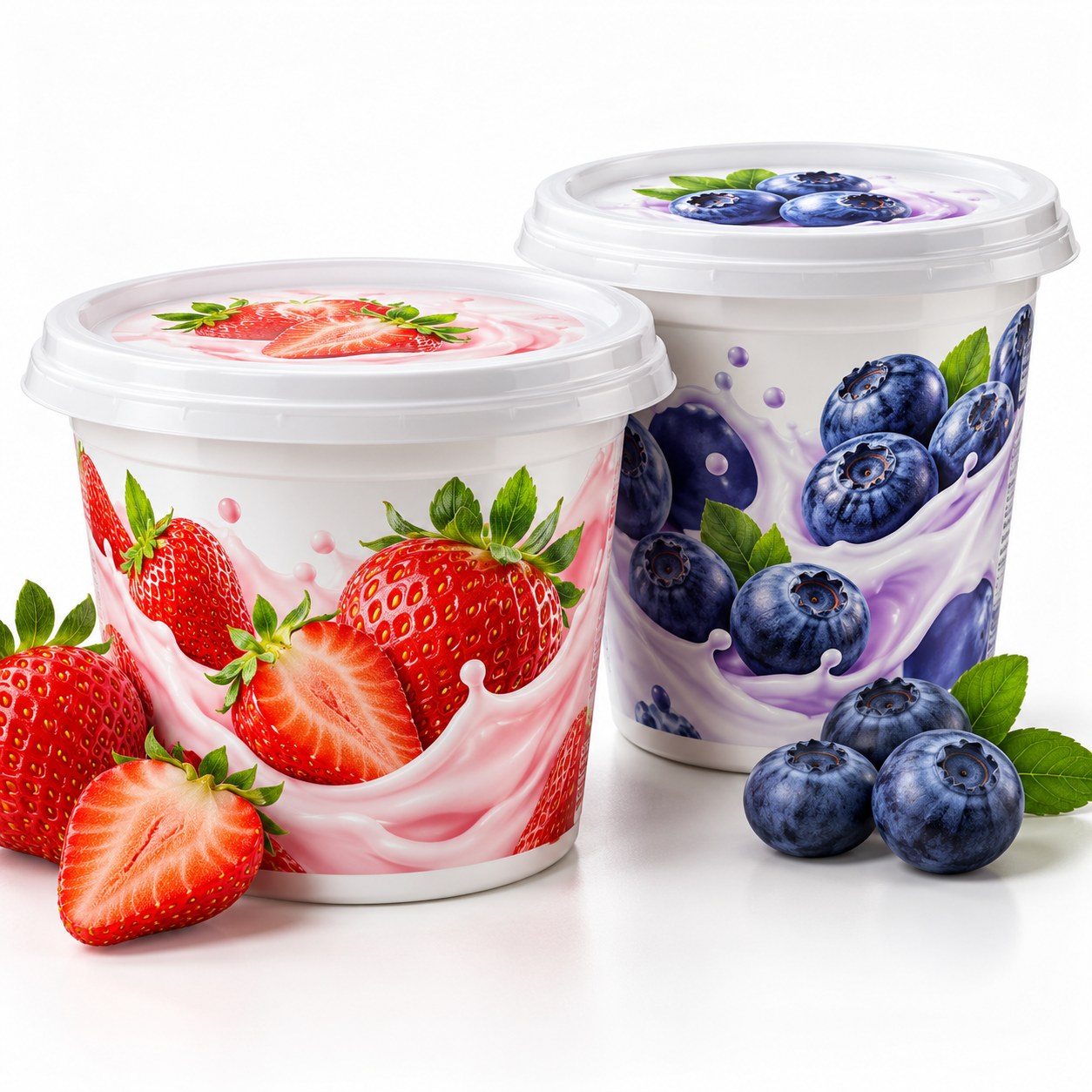
Dairy & yoghurt
For yoghurt, dairy products, ice cream, and other suitable chilled foods.
Packaging Expertise. Engineered for Impact.
IML means In-Mould Labelling. A printed label is placed inside the mould before the plastic container is formed. During moulding, the label becomes attached to the container surface, so the label and container are produced as one finished pack.
IML is commonly associated with injection-moulded tubs and containers. It is different from applying a sticker after the container has been made.
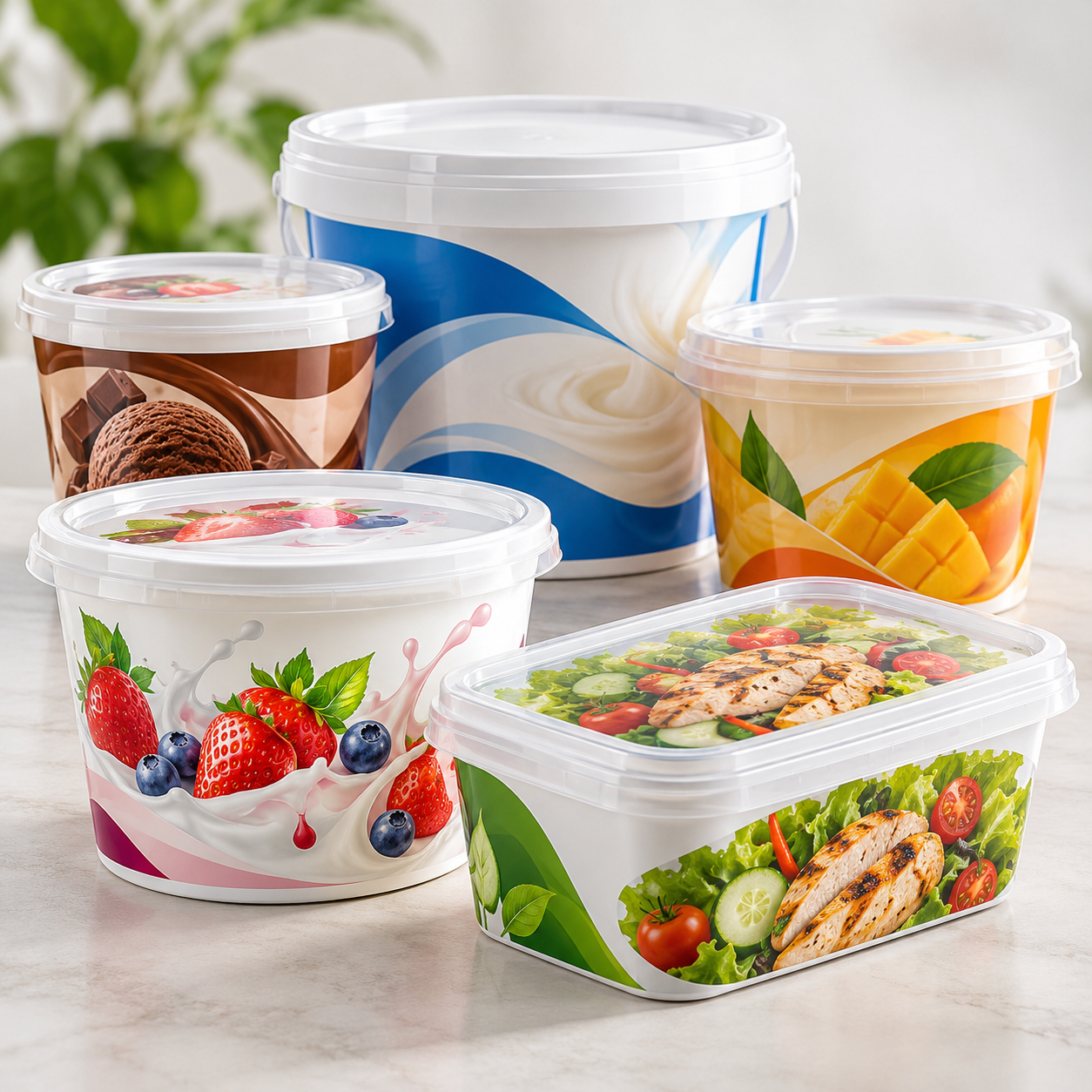
IML packaging combines container functionality with integrated printed graphics for a range of food and non-food applications.
For yoghurt, dairy products, ice cream, and other suitable chilled foods.
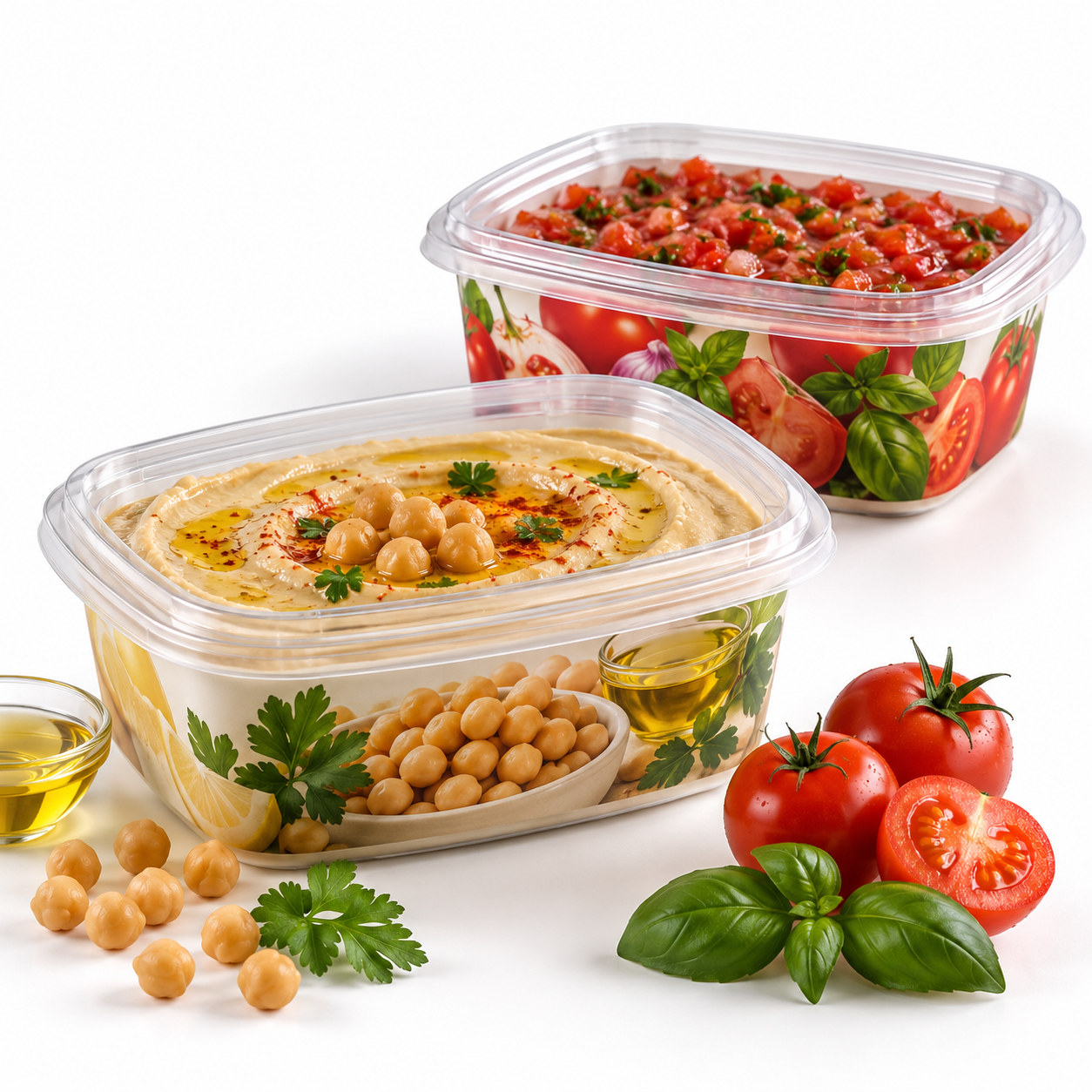
For butter, spreads, dips, snacks, and selected ready-to-eat food products.
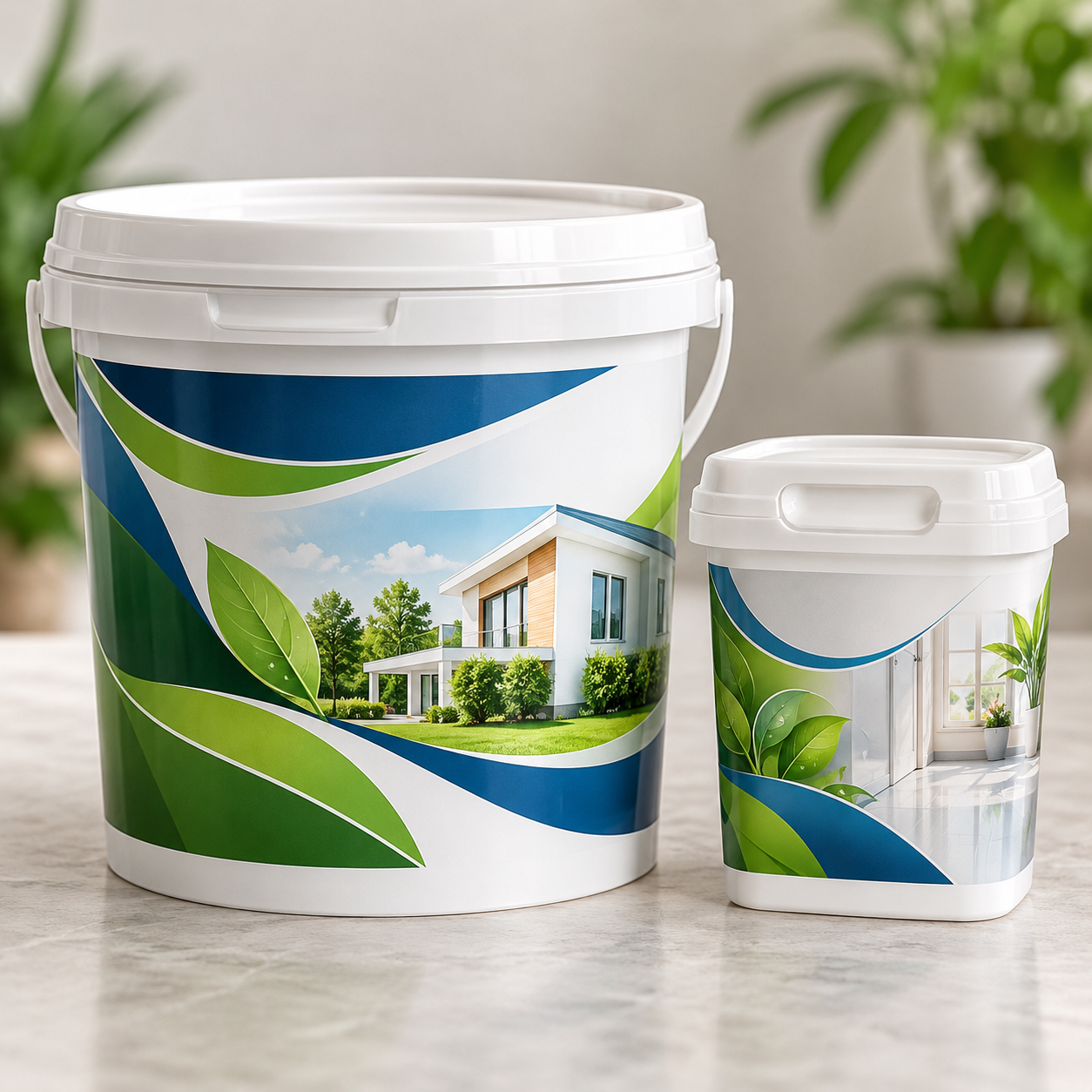
For paint, coatings, household products, and other suitable non-food applications.
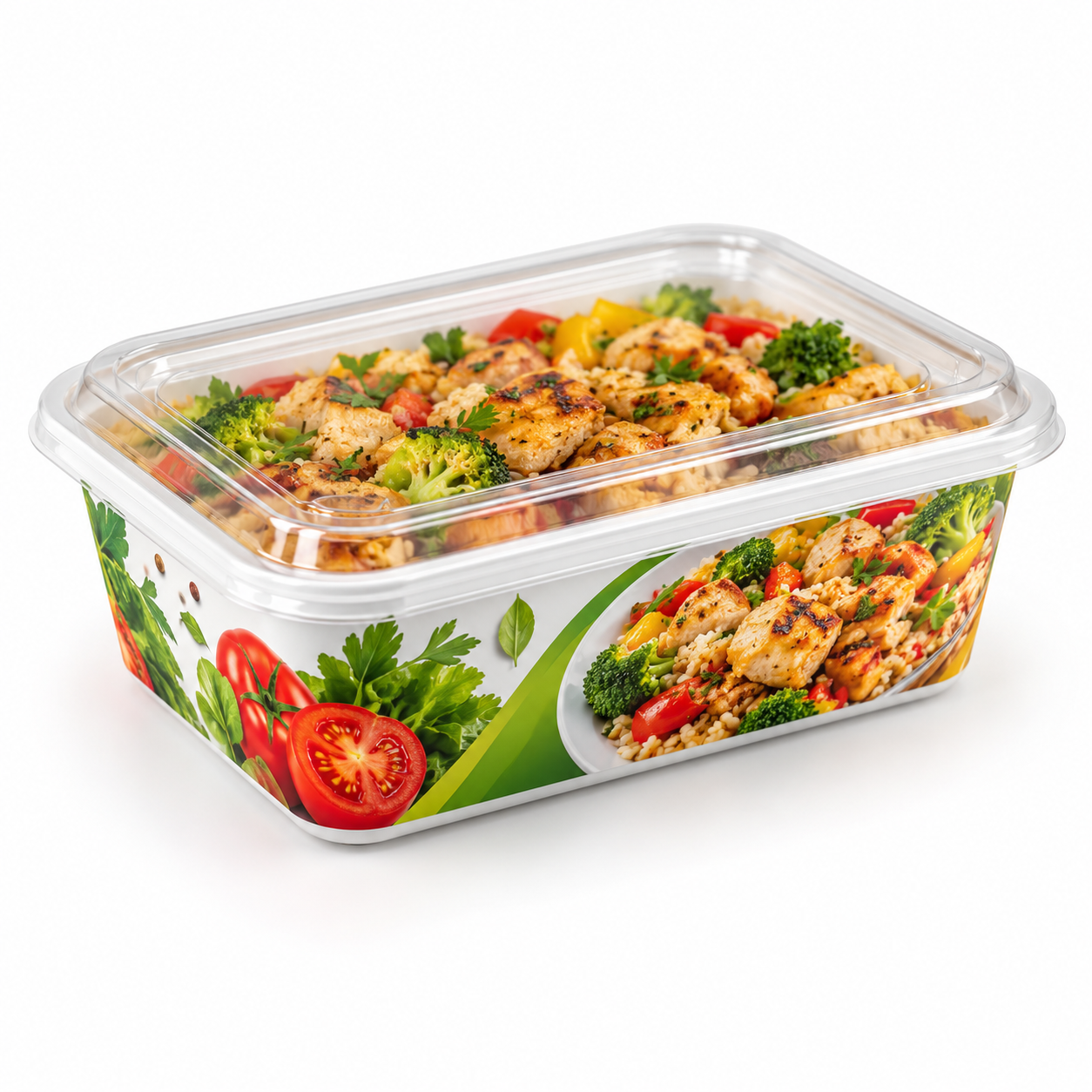
For products where clear graphics, branding, and shelf presentation are important.
The label is applied during moulding rather than as a separate post-production step.
High-quality printed graphics can support product information and shelf presentation.
Properly controlled processes can help achieve consistent label positioning.
Integrated labels may resist peeling better than some separately applied labels.
A range of container shapes and label designs may be possible, depending on tooling and machinery.
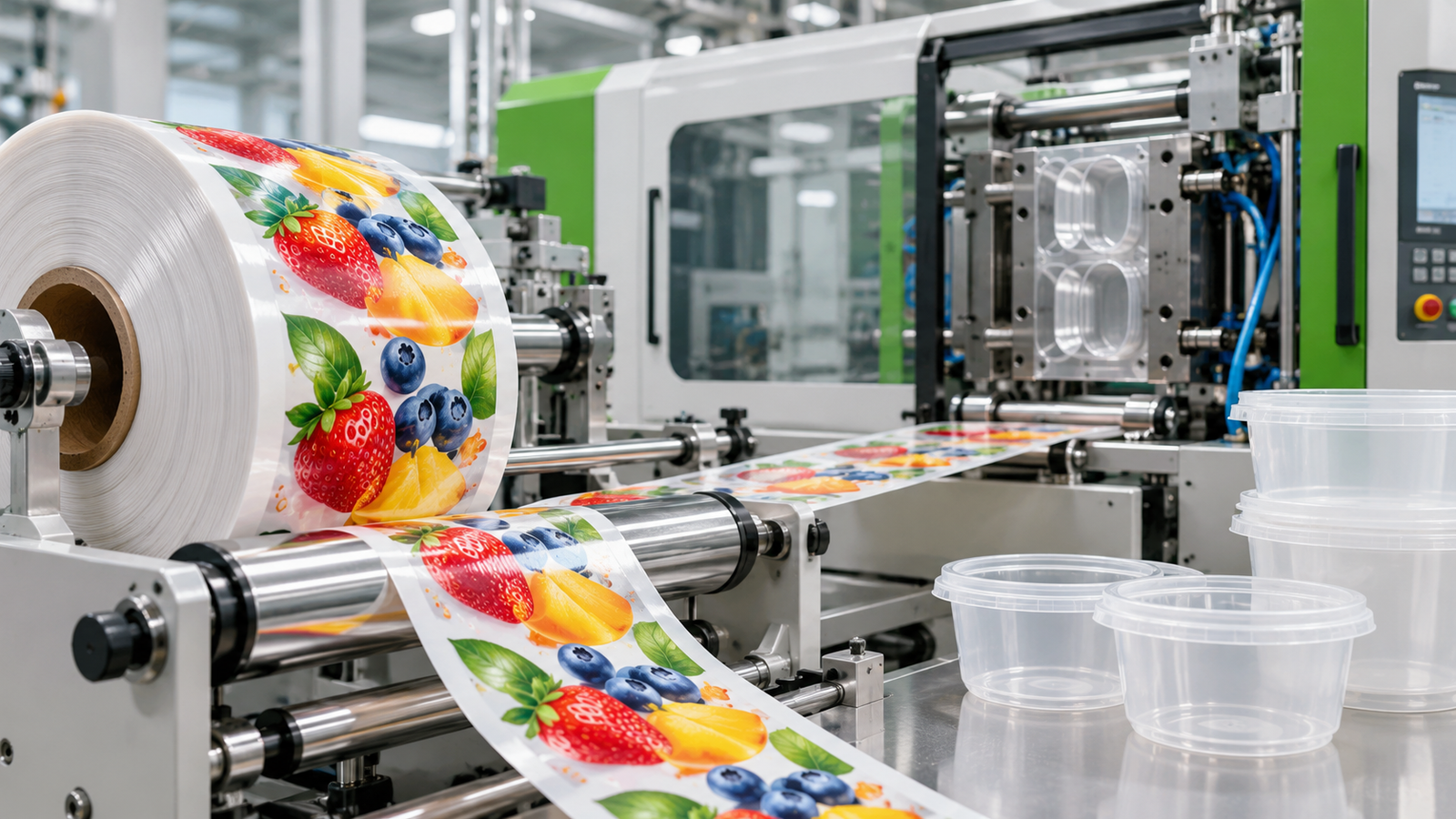
IML requires compatible labels, moulds, container materials, and process settings. Label artwork, position, container shape, and food-contact needs should be agreed before production.
Confirm whether the required product uses injection-moulded IML packaging. Not all labelled containers are made using IML.
No. A sticker is normally attached after the container is made. In IML, the label is placed in the mould and becomes integrated with the container during moulding.
It depends on the container and label materials, their compatibility, and local recycling systems. Ask the supplier for material and recyclability information.
Yes, for suitable applications, provided the container, label, inks, and manufacturing process meet the relevant food-contact requirements.
Get guidance on container materials, label compatibility, design, and packaging requirements.